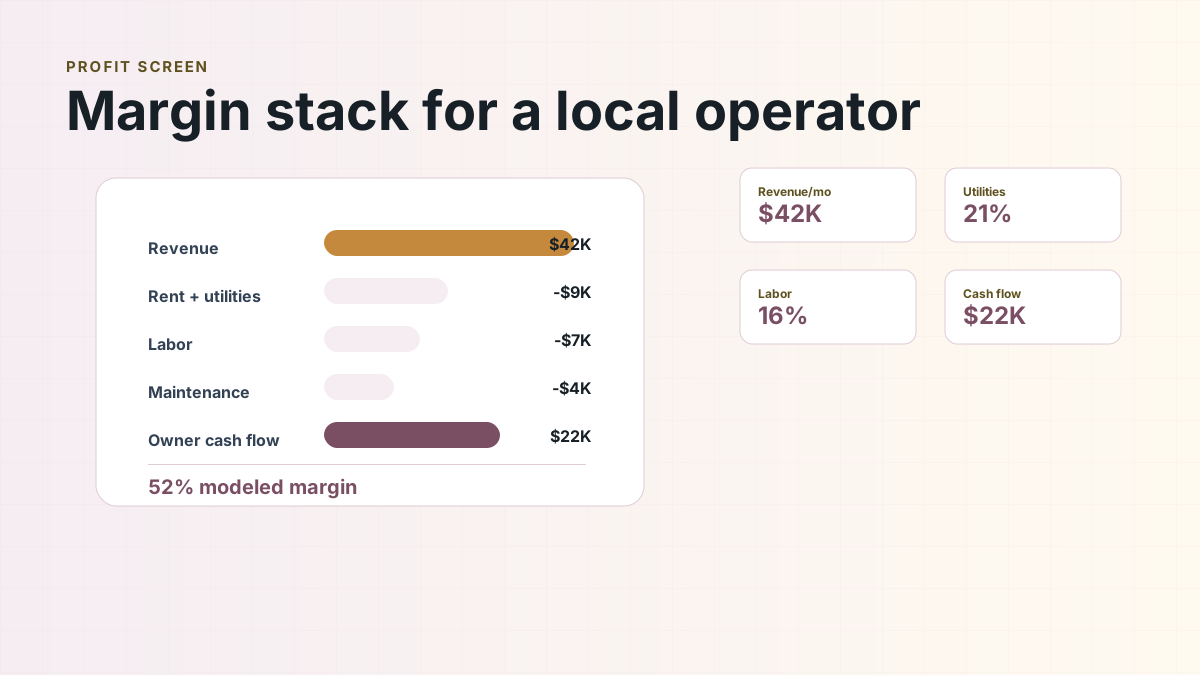
A laundromat can show a 30% operating margin and still leave its buyer no cash after financing and withdrawals. The worked example below shows exactly how. Define the margin, verify revenue and utilities, and separate store economics from the price and financing used to buy it.
A $300,000 laundromat: margin versus buyer cash
Here is a fully specified illustration, not a claim about the average laundromat. Annual revenue is $300,000; utilities are $66,000, occupancy $48,000, paid labor $45,000, routine repairs $12,000, supplies and processing $15,000, and insurance and administration $24,000. These expenses total $210,000, leaving $90,000 or a 30% operating margin before debt, buyer withdrawals, tax and replacement capex.
Same store, different utility and rent exposure
| Annual item | Base case | Stress case |
|---|---|---|
| Revenue | $300,000 | $300,000 |
| Utilities | $66,000 | $79,200 |
| Occupancy | $48,000 | $60,000 |
| Other operating costs | $96,000 | $96,000 |
| Operating cash flow before debt | $90,000 | $64,800 |
| Operating margin | 30.0% | 21.6% |
| Debt service | $48,000 | $48,000 |
| Business DSCR | 1.88x | 1.35x |
| Cash after debt | $42,000 | $16,800 |
If the buyer withdraws $30,000 and sets aside $12,000 for replacement equipment, the base case has no remaining cushion and the stress case is short $25,200 before income tax. That is why a 30% operating margin is not a 30% acquisition return. Do not subtract the opening working-capital reserve again in each annual calculation.
Break-even revenue before owner withdrawals is fixed operating costs plus debt service divided by contribution margin. If utilities, supplies and processing vary with sales at 27% combined and other costs are fixed at $129,000, break-even after $48,000 debt service is $177,000 / 73% = about $242,466. Adding $30,000 of owner withdrawals and $12,000 equipment provision raises that cash target to $300,000.
Why margin rules of thumb are risky
Two laundromats with the same revenue can have very different profit margins. One may have efficient machines, low rent, stable card data, and a strong lease. The other may have old equipment, rising utility bills, weak controls, and labor-heavy service revenue. A buyer who applies one generic margin can overpay for the second store.
Start with revenue proof
Revenue proof comes before margin. Ask for card processor reports, coin collection logs, bank deposits, tax returns, wash-dry-fold order history, vending records, and pickup/delivery platform reports. Then compare revenue to utility usage and machine turns.
Reconcile each month's card activity, coin collections, deposits, applicable sales-tax filings and utility consumption to annual filed returns. Explain transfers, sales tax, timing differences and non-sales deposits. Unsupported cash sales may be excluded by the lender; do not pay a multiple on a verbal estimate.
Build projections from the following verified inputs.
Laundromat margin inputs to verify
Build projections from these verified inputs.
| Input | Why it matters | Evidence |
|---|---|---|
| Self-service revenue | Core recurring sales base. | Card reports, coin logs, deposits, tax returns. |
| Water/sewer | Major variable cost tied to washer usage. | Monthly bills, rate schedule, leak/repair history. |
| Gas/electric | Dryer and heating economics vary by equipment and location. | Utility bills, machine mix, rate changes. |
| Rent/CAM | Fixed occupancy cost can overwhelm smaller stores. | Lease, CAM statements, renewal terms. |
| Repairs/capex | Old machines can make reported margin temporary. | Repair logs, technician invoices, replacement quotes. |
Underwrite utilities, rent, and labor
Utilities are operating economics, not footnotes. ENERGY STAR notes certified commercial clothes washers are more efficient and use less water than standard models, which is why machine mix can affect cost. EIA electricity price data shows electricity prices vary by location and customer type, so national assumptions are not enough.
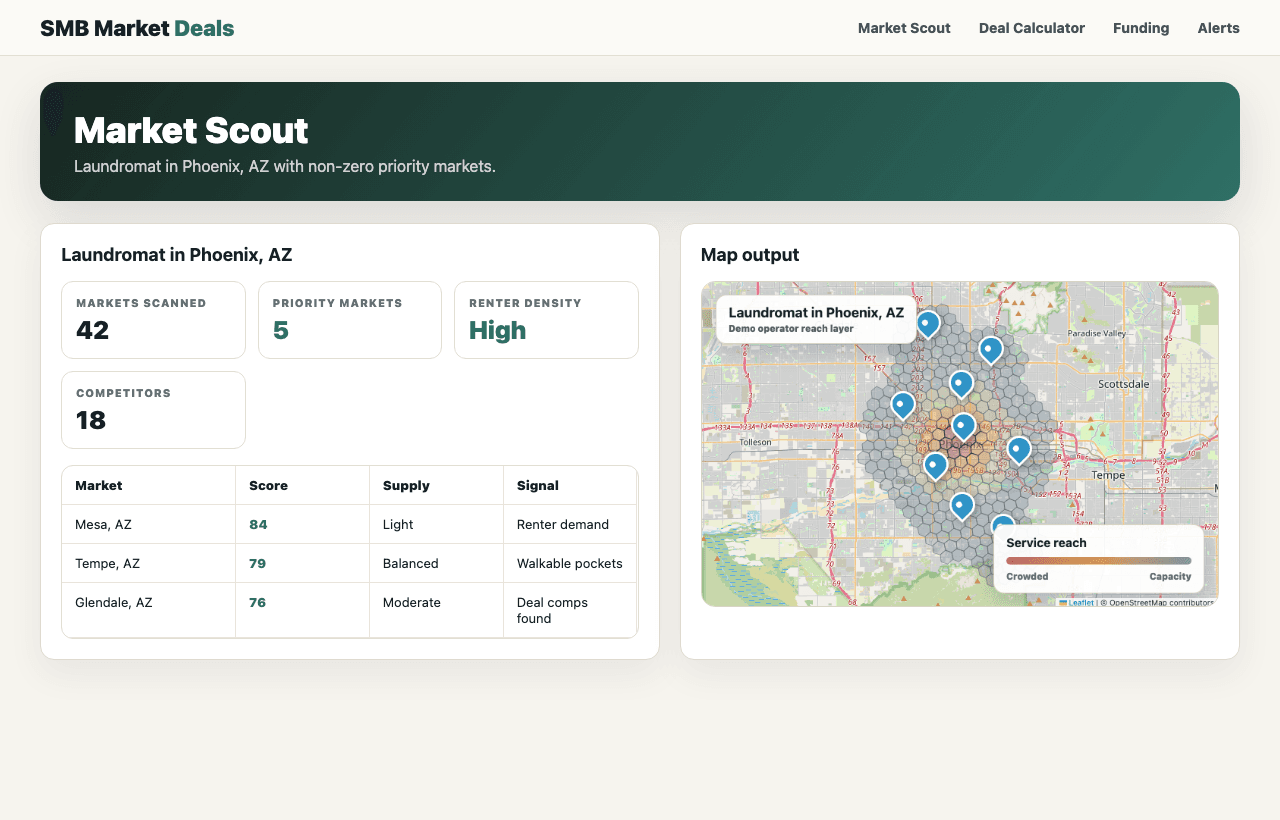
Local demand also affects margin because it shapes turns, pricing power, and the ability to pass through utility or labor increases. Use Census housing data to frame renter context, then verify the actual competitor set and customer path on the ground.
Rent matters just as much. A laundromat with strong margin under a below-market lease may become mediocre when the lease renews. Read assignment rights, renewal options, rent escalations, CAM, utility responsibility, and landlord consent.
For a leased site, ask the lender to review the remaining term, renewal options controlled by the buyer, assignment and landlord waiver before you sign. Plan for site control through the loan term, commonly ten years for a business-only acquisition. A renewal that needs fresh landlord approval is not the same as a buyer-controlled option.
Adjust for machine age and capex
Current margin can be overstated if the seller has delayed machine replacement. Build a capex reserve into your underwriting. If several large machines are near replacement, the real buyer return is lower than the trailing P&L suggests.
Compare repairs and maintenance across three tax years. A recent decline may mean newer equipment or completed repairs, but it may also signal deferred work. Check invoices and service logs before treating the decline as permanent profit. Build a sources-and-uses schedule covering purchase price, equipment, renovations, fees and opening working capital.
Separate self-service from wash-dry-fold
Wash-dry-fold can grow revenue, but it adds labor, quality control, refunds, scheduling, commercial-account management, pickup routes, and supplies. Do not assign the same margin to every revenue dollar unless the records prove it.
Build a cash-flow model for your acquisition
A good model should separate store operations from acquisition structure. First calculate store-level economics before debt: revenue by line, direct expenses, occupancy, utilities, labor, repairs, and normalized owner benefit. Then add buyer-specific items such as debt service, buyer salary, professional fees, and reserves.
Separate business repayment from household affordability. If the buyer performs the departing owner's job, one owner's compensation may be an accepted add-back; a separate manager or technician still needs market-rate pay. Test the buyer's living costs, outside income and personal debts separately through global cash flow. Do not deduct the same compensation twice.
That separation matters because sellers usually talk about the store as it exists today, while buyers need to understand the business after financing and transition. A store can have a respectable operating margin and still produce too little buyer cash flow after acquisition debt and machine replacement.
The model should show base revenue, verified expenses, normalized SDE, immediate capex, buyer salary, debt service, working capital, and transition cushion. If the seller cannot provide enough evidence to build that model, reduce the price, change the structure, or pass.
Frequently asked questions
What profit margin should I expect?
Specify the definition first. The worked store earns 30% before acquisition debt and owner withdrawals, but leaves no cushion after the illustrated financing, withdrawals and replacement provision. Underwrite the actual store rather than adopting an unsourced national range.
How much can the owner take home?
Calculate cash after all business debt, taxes, necessary capital spending and changes in working capital, then test household needs. Accounting profit, SDE and spendable cash are different measures.
For acquisition financing requirements and the October 1, 2026 rule change, read our SBA loan guide.